
Vineyards. The essentials we have.
We care, plant and protect.
First, our viticulture was affected by the destructive phylloxera, then by the plague of communism. Today, our vineyards are threatened by game and disease.
Vine phyloxera

Source: Wikipedia.com
At the end of the 19th century, the vineyards under the Little Carpathians were hit by a disaster that no one knew until then – filoxéra viničová. This small pest originating from America attacked the roots of vines and within a few years was able to destroy entire vineyards.
Traditional varieties that had been associated with Blue for centuries disappeared one after the other. Many vineyards remained abandoned and the shape of the landscape changed dramatically.
The solution became the grafting of European vines on American rootstocks, which resisted the filoxera. This step saved viticulture in Modra and throughout Slovakia, but at the same time it forever ended the era of the original vine growing on its own roots.
To this day, the philoxera is a reminder of how fragile the balance between man, soil and nature is – and how important it is to protect what we have.

Non-freedom period
During the last century, interventions in agricultural land – by expropriation, association or extensive terracing, which was conducted across the original plots –, disrupted the natural relationship of the inhabitants to the land. Many vineyards were plowed and never restored, which permanently changed the character of the landscape under the Lesser Carpathians.
Today, the fragmentation of the land fund and the number of owners prevents an easy return to the original landscape. Many plots remain unused and vineyards that until recently yielded a desolate harvest.
This is also why our goal is to return viticulture in Modra to its place and build on the generations that gave it a face. We believe that together we can restore not only vineyards, but also the relationship of people to the land that is the basis of our city and culture.
The result is hermits. And what do they cause?
A serious threat to the future of viticulture. A creeping source of diseases and game that destroys the results of our work and with an impenetrable jungle of arrowroot is a blinker wound on the appearance of our vineyard area.
The wasteland is not a romantic wilderness. Pusták is a direct threat to the long-term ability of the inhabitants of the Lesser Carpathian region to survive. Hermits in the hands of the state, the city or known and unknown owners - in any case, they are a threat to history and the future.
-
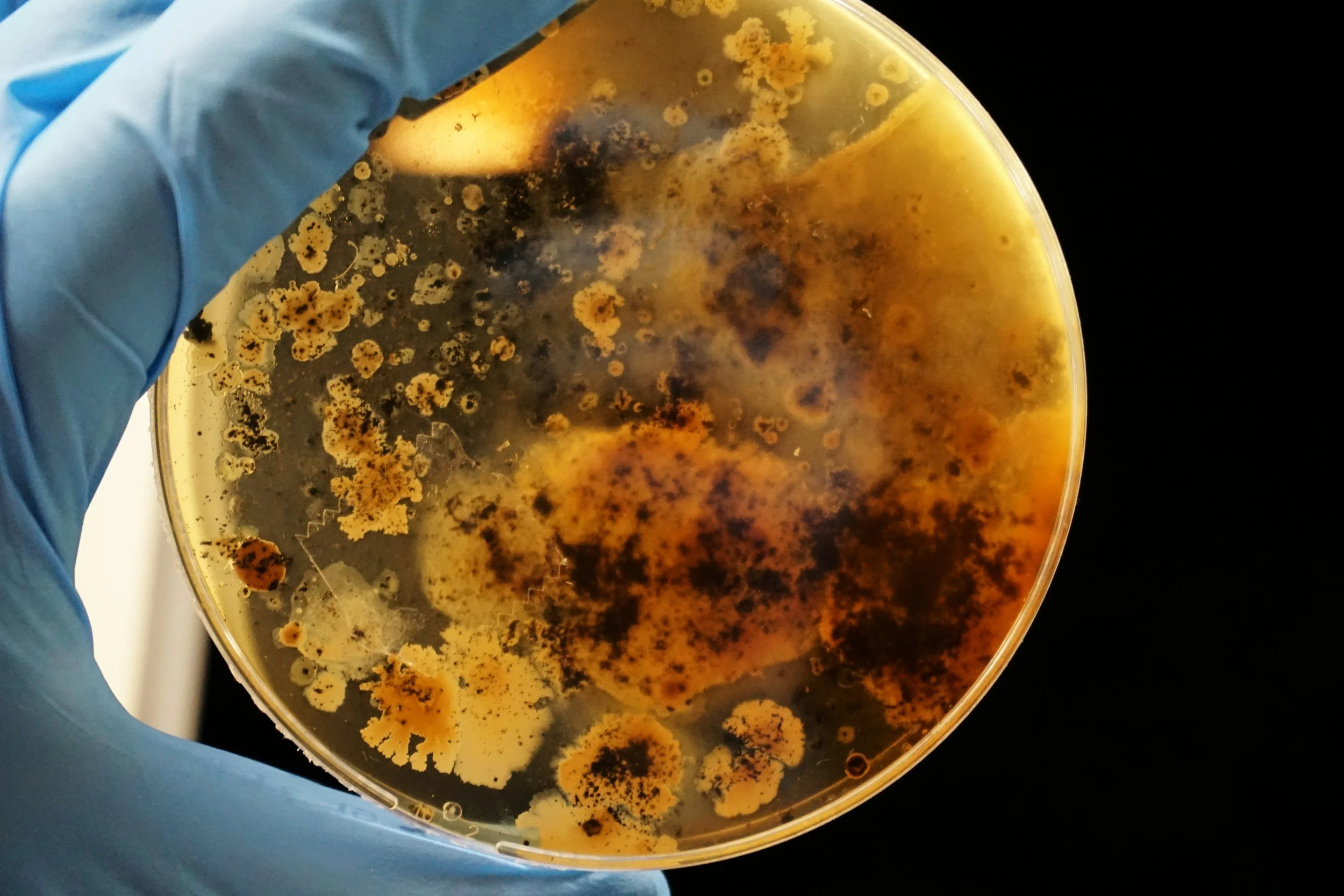
Unmaintained and desolate vineyards are not only a sad image of the landscape, but also a source of danger for the entire viticultural environment. In such stands, fungal diseases such as downy mildew, powdery mildew or botrytisthat can attack even carefully treated vineyards in the neighborhood.
Various pests and weeds are also a problem, and they reproduce rapidly in abandoned vineyards. Without regular cultivation, these areas become a focus of disease and weaken the efforts of winegrowers, who put a lot of work into their soil and plants.
Parcels neglected in this way are a living reminder that the vineyard needs constant care and that only with a joint responsibility can we protect the health of vineyards in the entire region.

-
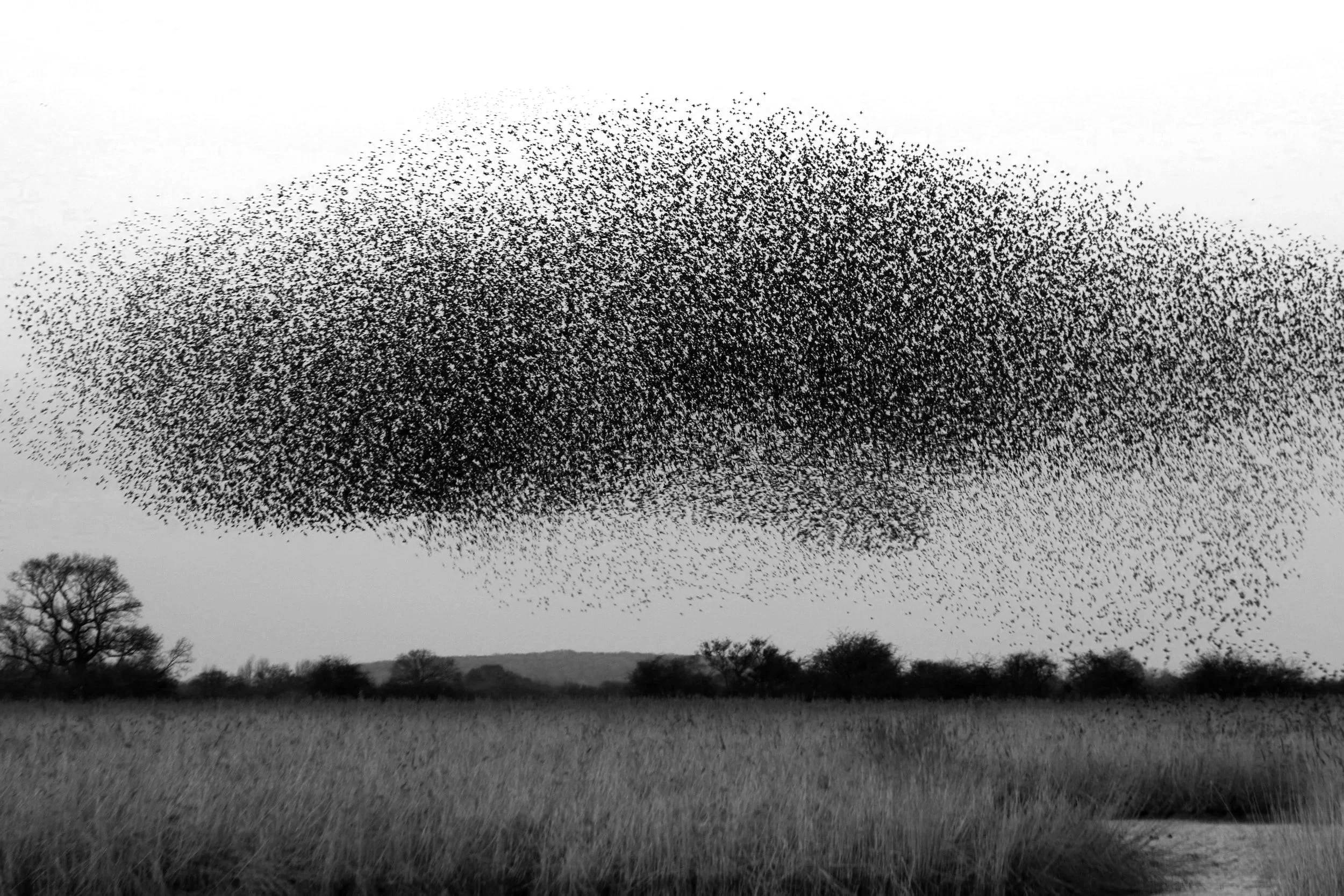
Abandoned vineyards also become a refuge for birds – especially for starlings, which cluster into huge flocks in the autumn season. Hidden in unkempt stands, they wait for the moment when they can mass attack the crops in the surrounding vineyards.
It is a big threat for winegrowers – fruits that are carefully grown all year round, can be significantly damaged or destroyed within a few days or even hours. Losses to grapes are often so extensive that they threaten the entire harvest and the resulting quality of the wine.
It often seems that it is enough to deploy acoustic cannons and the birds will get scared. However, the reality is different – starlings get used to these sounds quickly and the effectiveness is minimal. Reliable protection requires demanding and expensive solutions that not every viticulturist can afford.
Starlings remind us that barren vineyards are not only an aesthetic problem, but also a direct threat to those who still fight for the vineyards with love and effort.
-
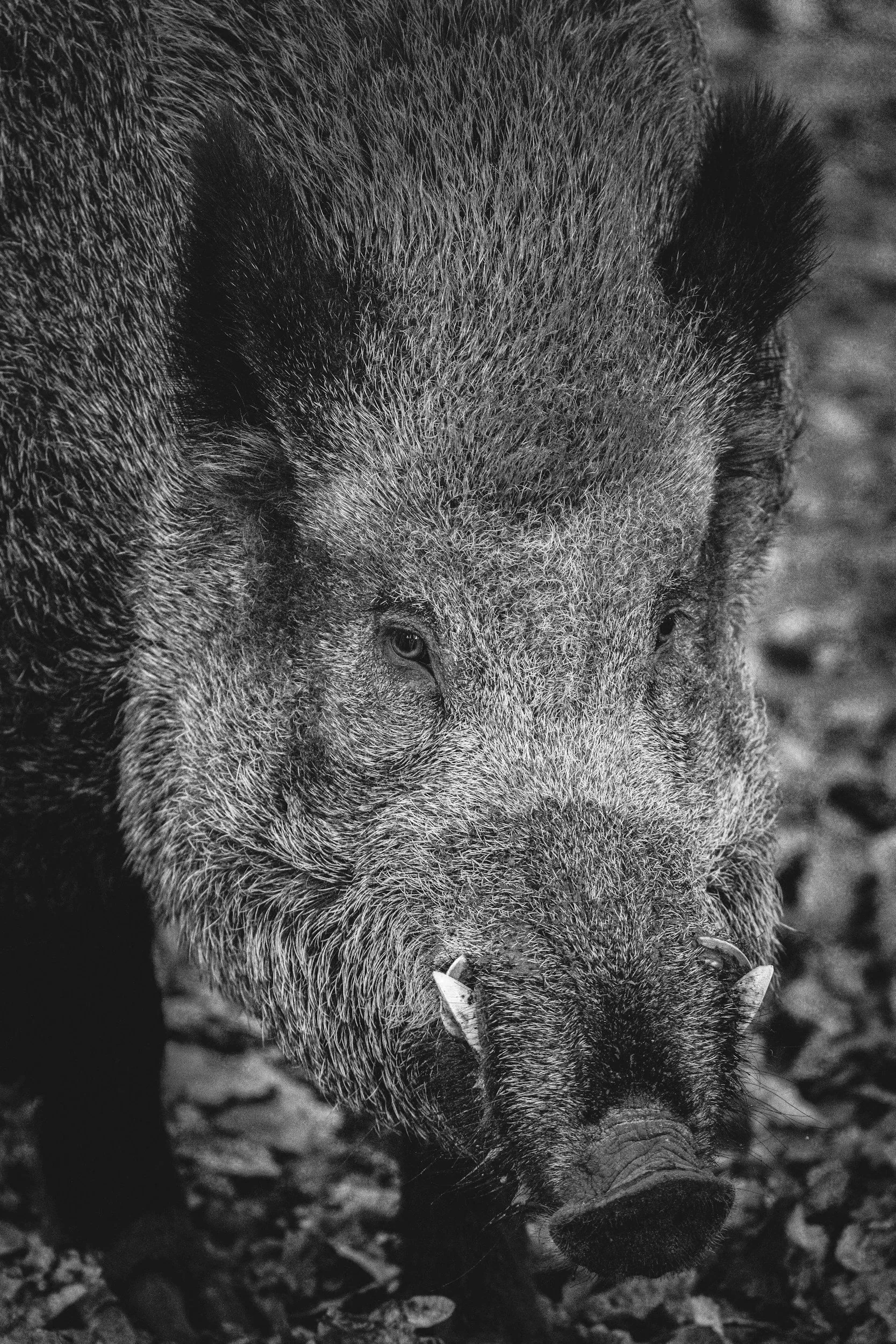
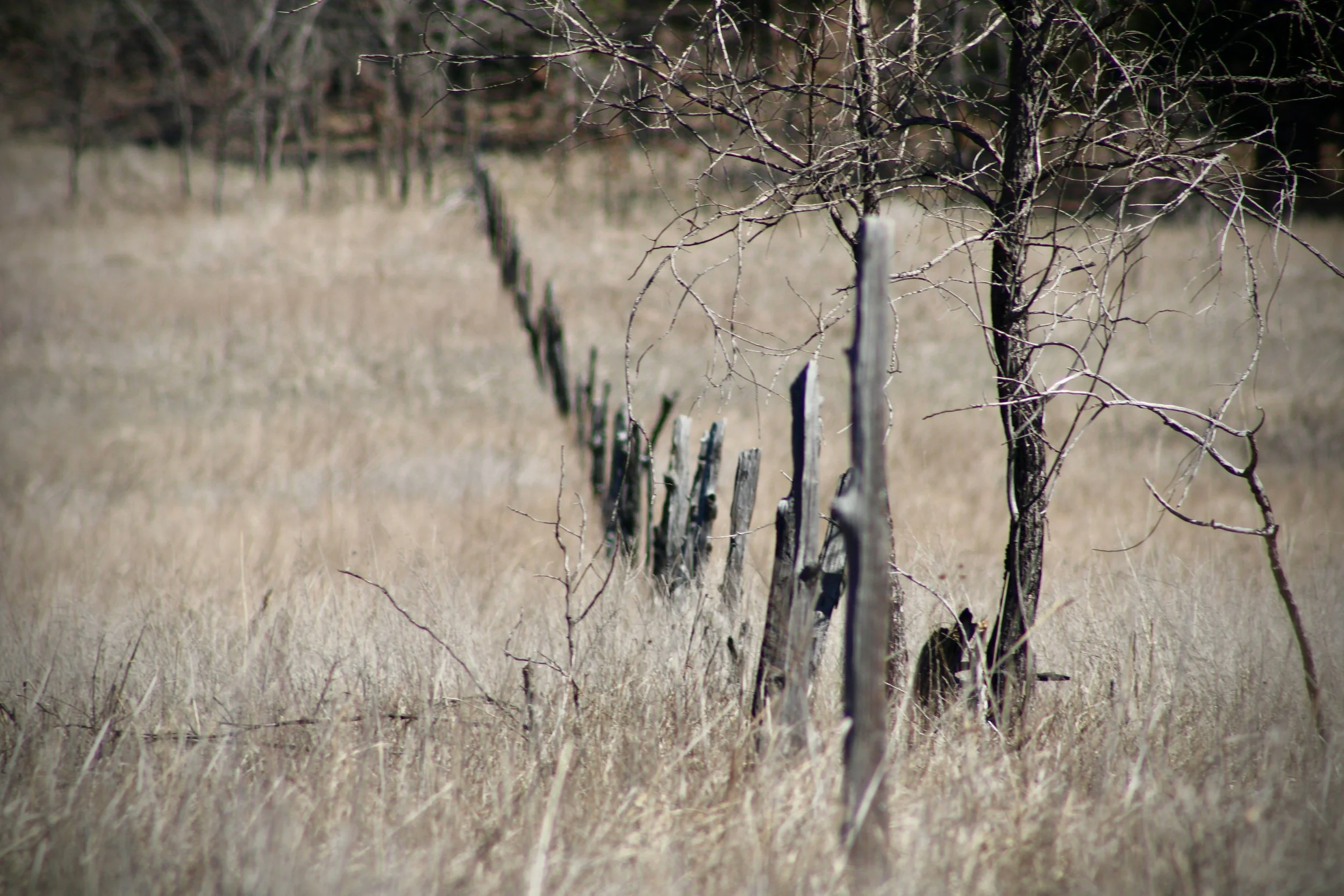
Abandoned vineyards attract not only diseases or birds, but also beasts, which is moving here from the woods. For wild boars or fallow deer, such places are ideal refuges – they provide them with peace, shelter and plenty of food. Unfortunately, that food is often directly the harvest of winegrowers.
Defending yourself against game is extremely difficult. Fencing vineyards is very expensive and in the case of ratites with large antlers or strong wild boars, it is still only limitedly effective. In addition, wild boars destroy the vineyard soil – dig in it, damage the vine roots and thus cause damage that cannot be quickly repaired. Ratica animals, in turn, destroy tissues, harvest grapes and destroy entire stands.
Animals in desolate vineyards are thus not just a matter of nature, but a direct risk for anyone who tries to maintain vineyards and preserve them for the future.
-
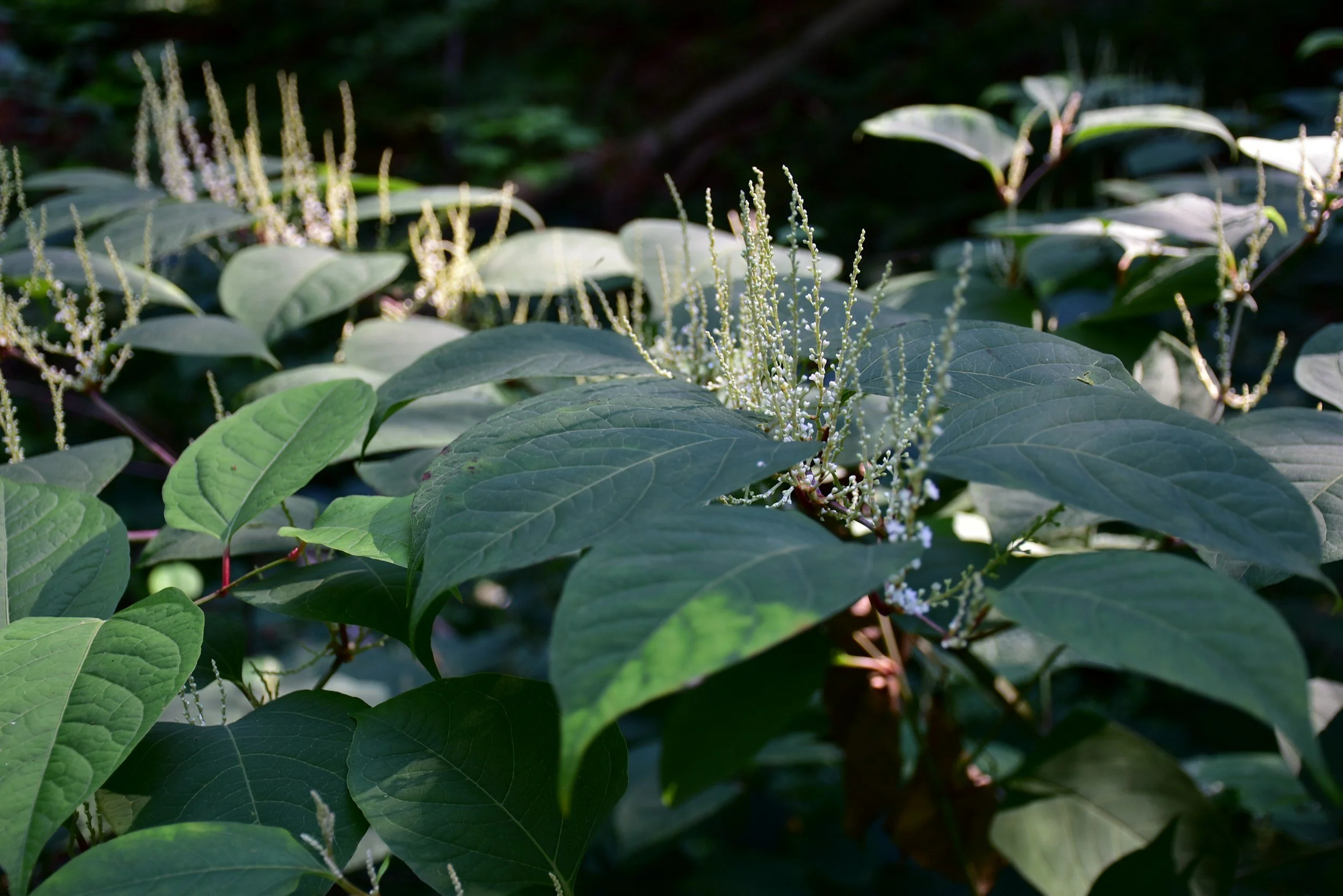
Abandoned vineyards are also an ideal space for invasive plant species, such as the Japanese knotweed. These spread rapidly in barren stands, displacing native vegetation and changing the character of the landscape. Removing them is difficult and expensive, so preventing and caring for the vineyard is always the best protection.
Desolate vineyard - THREAT for everyone.
Vineyard needs to be taken care of – land ownership is –'s commitment to the landscape, tradition and future generations.
If you don't have the opportunity or interest to maintain your vineyard, open up space for those who can. Young winemakers are looking for land to continue the tradition. One thing is certain – from vineyards will never be building plots.
Golden yellowing of the vine
Pliaga by name Grapevine Flavescence Doreé Phytoplasma. And its transmitter Scaphoidus Titanus. It could be the end of Wine from Blue.
-
Absolutely all winegrowers. Yes, even those with one vine root! Disease he does not know the boundaries of land – which affects one vineyard field, also threatens neighboring vineyards. We are all neighbors in this together, and therefore it is important that every vintner follows the precautions and monitors the health of his vine roots. Together, we can minimize the spread and protect the harvest and the tradition of Modran vineyards.
-
Golden yellowing of the vine (Grapevine Flavescence Dorée) is a serious bacterial disease of the vine that attacks the vascular system of the plant. The infected root cannot supply the leaves and bunches with sufficient water and nutrients, which causes typical yellowing of leaves, stunting of grape clusters and gradual death of vines.
The disease spreads mainly through small sentient insects, the vector Scaphoideus titanus, and can spread rapidly among neighbouring vineyards. If it is not stopped, it threatens not only the harvest, but also the entire vineyard and the tradition of Modran viticulture.
Prevention and timely control are key – every vintner has a responsibility to protect his vineyards and neighbors so that the disease does not spread.
-
The golden yellowing of the vine disrupts the vascular system of the plants, which leads to yellowing of leaves, stunting of fringes and gradual death of roots. Affected plants cannot properly receive water and nutrients, so the harvest is significantly reduced or completely lost.
The disease spreads rapidly among neighboring vineyards through sentient insects – vector Scaphoidus titanus, and therefore may endanger entire wine-growing areas, not just individual stands. Early identification and control are therefore crucial for crop protection, preservation of vineyards and the tradition of Modran viticulture.
-
The golden yellowing of the vine it does not spread by itself – its main vector is small chickpeas Scaphoideus titanus. These insects feed on plant sap and can infect healthy vines when the disease is transmitted.
In addition to insects, the spread can also be supported by movement of infected plant material – for example shoots or roots between vineyards. Therefore, it is important that every vintner complies with the rules of protection and cooperates with neighbors. The disease does not recognize land boundaries and quickly threatens entire wine-growing areas.
-
Absolutely everyone, including PIWI varieties. PIWI varieties are grape varieties that are resistant to fungal diseases such as mold and often to frost. This includes, for example, Hibernal, Savilon or Solaris odords.
-
If the Golden Yellowing of the Vine does not stop, the disease spreads quickly among neighboring vineyards and can destroy entire vineyards. Affected plants gradually die, the harvest decreases dramatically and the quality of the wine deteriorates.
The long-term spread of the disease threatens traditional varieties, wine culture and the entire Modran wine-growing landscape. Every viticulturist therefore has responsibility not only for his vineyards, but also for the protection of neighboring stands – together we can minimize the damage and preserve the future of Modran viticulture.
-
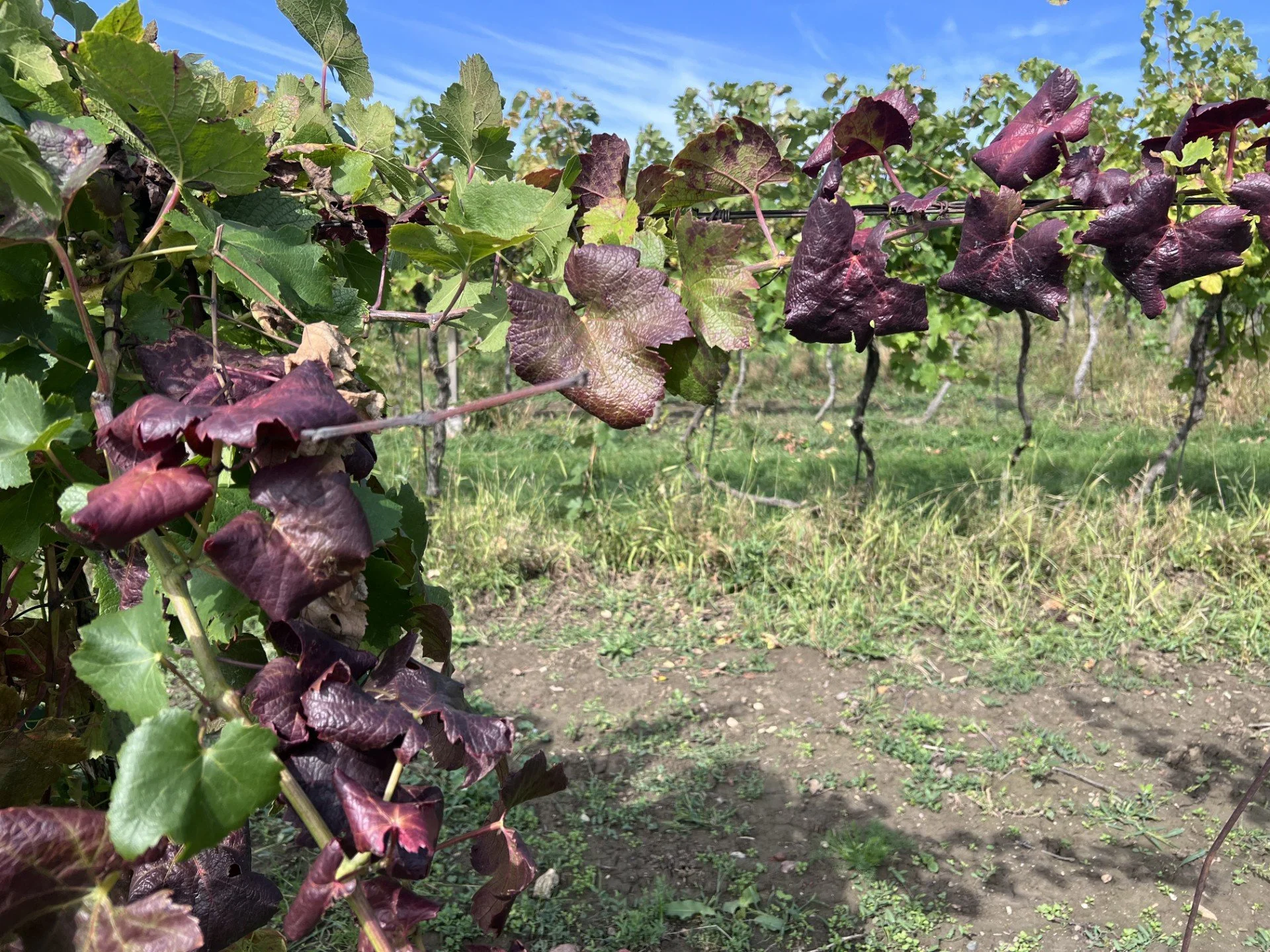
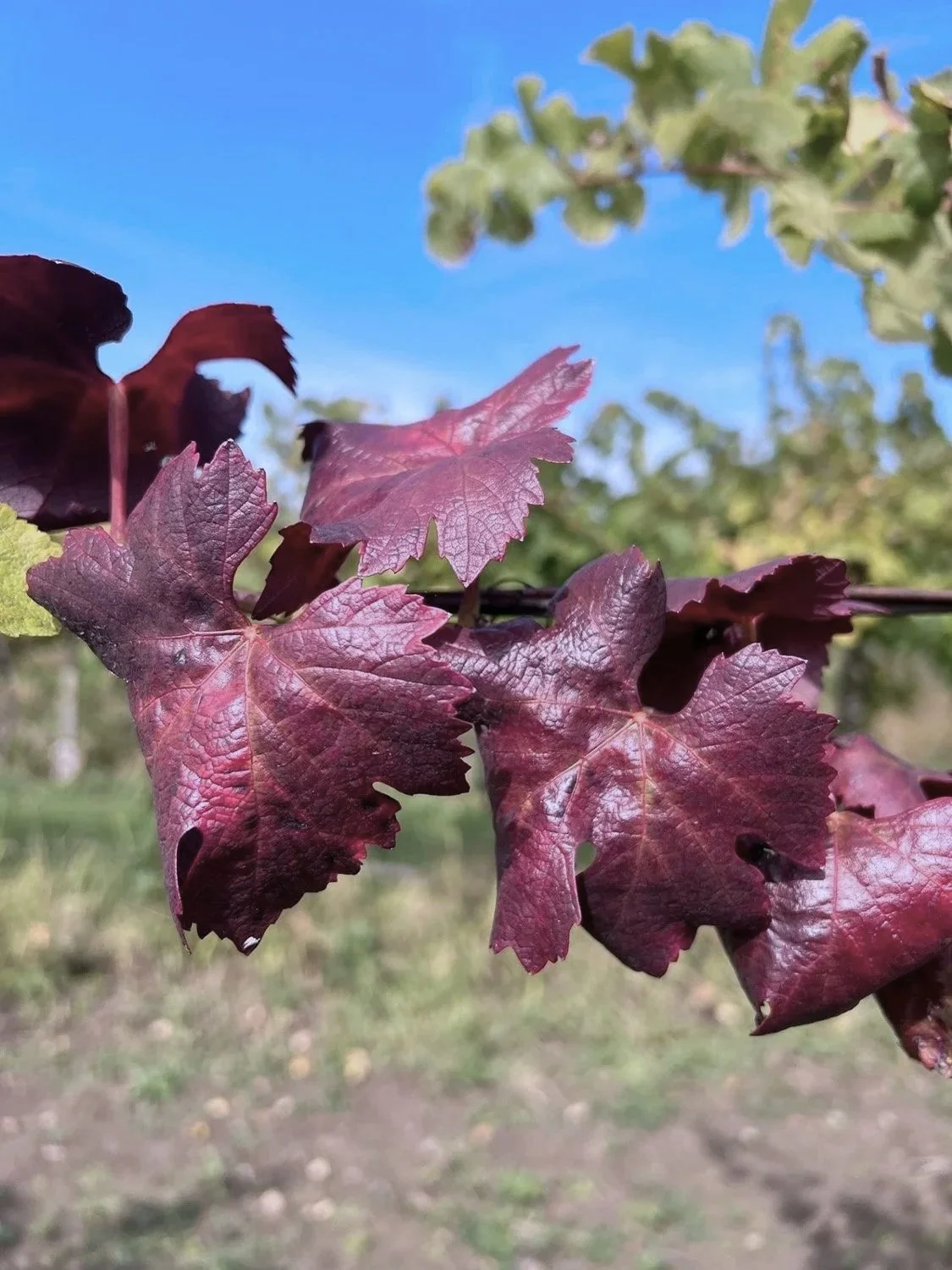
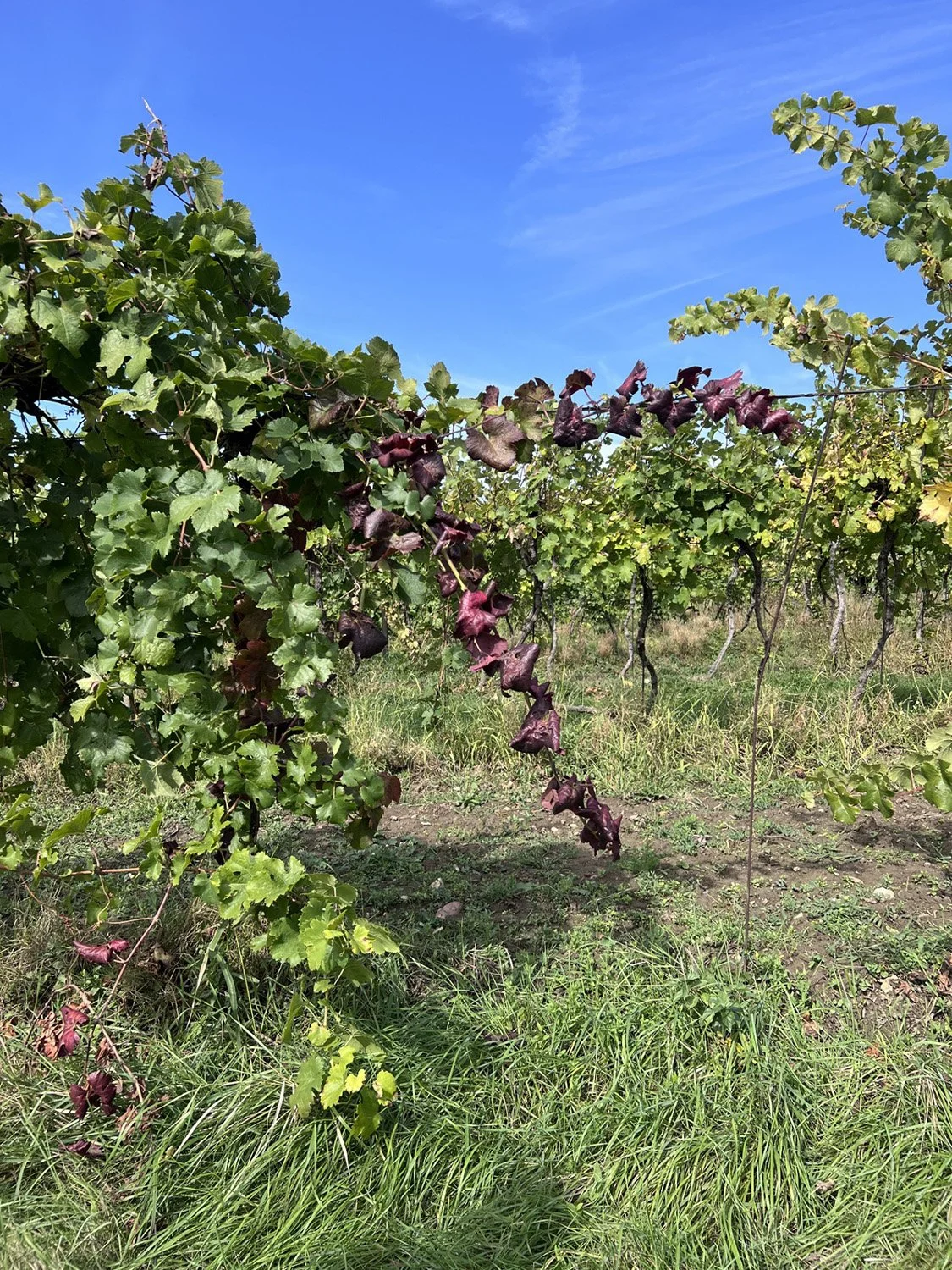
Symptoms develop primarily in the summer (around July). Depending on the variety, yellowing (for white grape varieties) or blushing (for blue grape varieties) of the leaves occurs during this period on the parts most exposed to sunlight. The edges of the vine leaves curve downwards, being typically both metallic shiny and brittle. The interveined regions of the leaves can become necrotic. The shoots bend and show incomplete lignification. So the shoots show signs of poor maturation, alternating between green and wooded parts. Sometimes black blisters can be seen in longitudinal rows along the shoot. Later, cream-colored spots appear along the main veins. In later infections, the racemes are irregular and the berries shriveled. They have significantly lower sugar content and higher acidity compared to healthy grapes. Shoots darken and die during the winter.
On the leaf blade, we observe colored spots that gradually increase in size until they finally merge. The spots are irregular or bordered by veins from the green parts. The maturation of the shoots is uneven when dark-colored spots appear on the surface. The internodes of the shoots can also be shortened.
-
Carry out a daily inspection of vineyards
Report any suspected occurrence to email ochrana@uksup.sk (ÚKSUP - Central Agricultural Control and Testing Institute)
Allow access to the vineyard by inspectors from ÚKSÚP
Eliminate all symptoms of cryptorals
Monitor the occurrence of vine cicadas (Scaphoideus titanus) which transmit the disease, with plates for monitoring and signalling the attack of harmful insects
Chemical protect with insecticides against vine cicadas (Scaphoideus titanus)
Burn the remains of the vine after cutting the vine in the spring, but also after cutting the vineyards after drying them in the summer
Replant vines no earlier than 2 years later
All vine seedlings must be marked with a plant passport
Inform each other between winegrowers
-
Link to the ÚKSUP website with the theme of golden yellowing of the vine.
-
Item descriptionGolden yellowing of the vine can spread fast and unobtrusive, often from a neighboring vineyard to your even before healthy. The main vector is small chickpeas Scaphoideus titanus, which can infect multiple plants over the course of a single season.
The rate of spread also depends on the density of vineyards and the proximity of infected stands – the more neighboring vineyards are sick, the greater the riskthat the disease will reach you too. Therefore, timely control and cooperation between winegrowers is crucial to minimize risk and protect crops.
Read about the protection of Modran vineyards


We help each other

Our cooperation with Hunting association Modra – Pole a The city of Modra it helps significantly in protecting vineyards from pests and game. Together, we can limit the damage caused by starlings, wild boars or fallow deer and thus protect crops and traditional Blue vineyards.
